
Things to do on the Isle of Man: A Heritage Hunter’s Guide
Nestled in the heart of the Irish Sea, the Isle of Man stands as a living museum, boasting an extraordinary timeline that stretches back over 10,000 years. From mysterious stone circles to magnificent medieval castles, this enchanting island offers history enthusiasts an unparalleled opportunity to explore Celtic, Viking, and Victorian heritage all in one compact destination.
Key Takeaways
- The Isle of Man boasts over 10,000 years of continuous human habitation.
- Home to some of the best-preserved medieval castles in Europe.
- Features unique Viking heritage sites and interactive museums.
- Offers three heritage railways and one heritage tramway still in regular operation.
- Hosts over 200 ancient Celtic crosses and carved stones.
- Provides excellent accessibility to historical sites via public transport.
- Most heritage sites are open year-round with extended summer hours.
Ancient Beginnings
The island’s story begins with its ancient monuments. The Meayll Circle, perched high on Meayll Hill near Cregneash on the south of the island, offers panoramic views and consists of twelve stone burial chambers arranged in a circle, dating back to around 3500 BC — one of the most complete Neolithic sites in the British Isles.
Nearby at Balladoole, visitors can explore a fascinating archaeological site with remains spanning the Bronze Age, Viking Age, and Celtic period, including a Viking ship burial dating from around 850 to 950 AD.
To the north of the island, Cashtal yn Ard (“Castle of the Heights”) stands as one of Britain’s largest and best-preserved Neolithic tombs, offering stunning views across the parish of Maughold and the sea toward the Lake District.
Medieval Magnificence: Castle Rushen
Standing proudly in Castletown, the old capital of the Isle of Man, Castle Rushen represents one of Europe’s most complete medieval castles. Built for a Norse king in the 13th century, the castle has served as a fortress, royal residence, mint, and Victorian prison. Open daily from the end of March to the end of October, adults £15.50, with free admission for children under 16 accompanied by adults.
The Story of Mann at the Manx Museum
Located in Douglas, the Manx Museum is the ideal place to begin exploring the Isle of Man’s rich history and heritage. The Viking Gallery offers an immersive experience into the island’s Viking and Celtic past, while the National Art Gallery is home to original works by artists such as Archibald Knox. For motorsport fans, the TT Gallery showcases a collection of artefacts including trophies and racing vehicles. Open daily 9:30–16:30, admission free.
House of Manannan: Viking Heritage Brought to Life
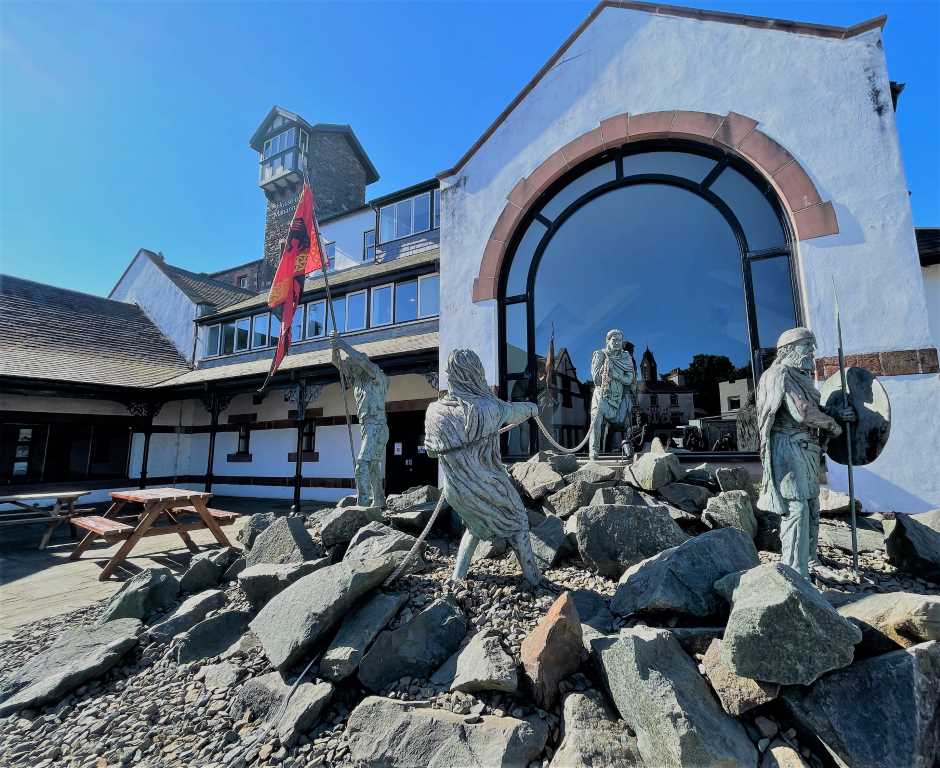
Located in a beautifully restored building in Peel, the House of Manannan is a premier destination for exploring Manx heritage. This award-winning museum uses cutting-edge technology to transport visitors into the island’s Viking and maritime past, through a full-scale Iron Age roundhouse and a Viking longhouse. Open daily 9:30–16:30, adults £15.50.
Peel Castle and St Patrick’s Isle
Connected to Peel by a causeway, this striking fortress stands atop St Patrick’s Isle, offering breathtaking panoramic views over the Sunset City and the Irish Sea. Originally built by the Vikings in the 11th century, the castle’s red sandstone walls remain remarkably intact. Open daily end March to end of October, 11:00–16:30, adults £12.50.
Heritage Railways and Tramways
With three operational heritage railways and a tramway, the Isle of Man has the highest concentration of such systems in the British Isles: the Steam Railway (Douglas to Port Erin), the Manx Electric Railway (Douglas to Ramsey), the Snaefell Mountain Railway (Laxey to Snaefell), and the Douglas Bay Horse Tramway.
Isle of Man Steam Railway
Established in 1873, making it one of the oldest in the world, the narrow-gauge railway runs for 15.3 miles from Douglas to Port Erin, offering passengers a delightful journey through lush countryside.
Manx Electric Railway
Dating back to 1893, the Manx Electric Railway connects Douglas with Ramsey, passing through Laxey, home to the famous Laxey Wheel, before reaching Ramsey with its bustling harbor and delightful cafes.
Snaefell Mountain Railway
Established in 1895, this railway ascends the island’s highest peak, Snaefell Mountain, offering stunning panoramic views.
Douglas Bay Horse Tramway
Established in 1876, the Douglas Bay Horse Tramway stands as one of the world’s last surviving horse-drawn tram systems, with charmingly designed tramcars and breathtaking vistas of the seafront.
These railways and tramways are only open during the months from the end of March to the end of October.
The Great Laxey Wheel
The Great Laxey Wheel, also known as Lady Isabella, stands as an iconic symbol of the island’s industrial heritage. This colossal 19th-century waterwheel served the local mining industry. Open daily end March to end of October, 9:30–16:30 (last entry 16:00), adults £15.50.
Maritime Heritage Trail
For those seeking active adventures, a walk along the Maritime Heritage trail is a sensible choice, linking historic harbours, lighthouses, and shipwreck sites, including Peel Traditional Boat Yard, Point of Ayre Lighthouse, the Nautical Museum in Castletown, and Port St Mary Heritage Centre.
Practical Tips for History Enthusiasts
- Purchase a Heritage Explorer Pass for unlimited access to all Manx National Heritage sites.
- Visit during shoulder season (April–May or September–October) for fewer crowds.
- Book accommodation in Castletown, Douglas or Peel for easy access to major sites.
- Carry waterproof clothing – Manx weather can be unpredictable.
Frequently Asked Questions
What’s the best time to visit heritage sites? April to October offers the best weather and full opening hours.
Are guided tours available? Yes, book through the Welcome Centre in Douglas or online.
Is public transport reliable? Yes, the island has an excellent bus network connecting all major heritage sites.
Are dogs allowed at heritage sites? Most outdoor sites allow dogs on leads; indoor museums generally don’t.
Ready to Explore Manx Heritage?
Make your journey through time complete by staying in one of our traditional Manx cottages. Many are historic properties themselves, offering authentic period features with modern comforts.