
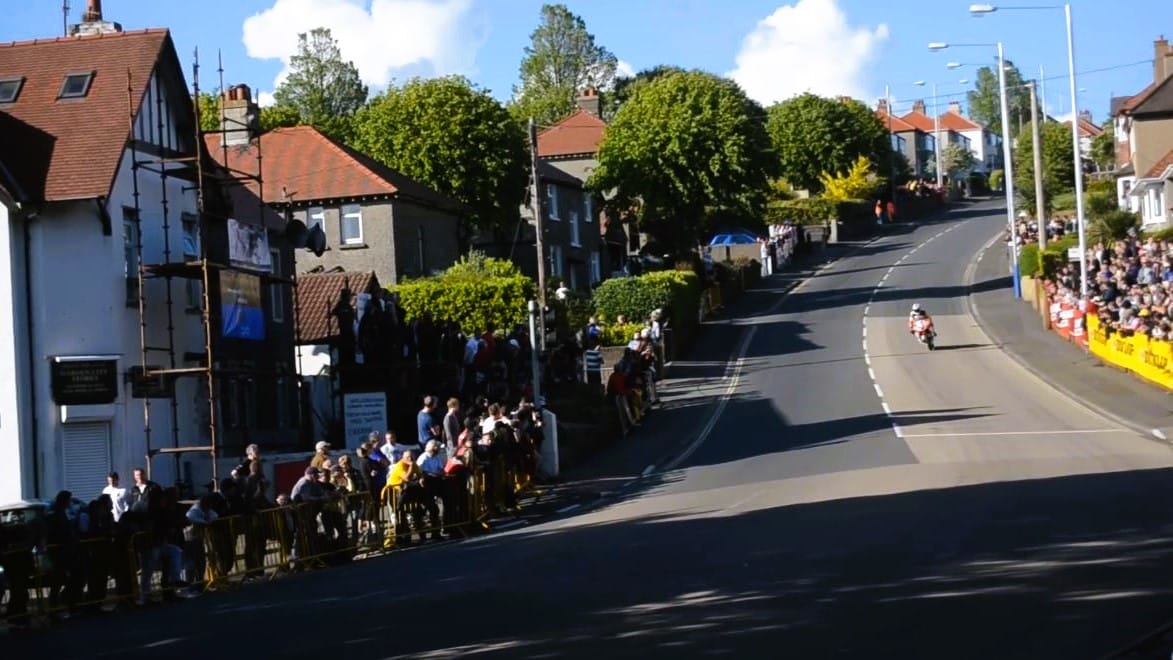
The Isle of Man TT is one of the most famous and demanding motorcycle races in the world. At the heart of the event lies the Mountain Course, a public-road circuit that tests the limits of skill, concentration and bravery. This guide provides a clear, lap-by-lap overview of the Isle of Man TT Mountain Course, explaining its layout, key sections and what makes it unlike any other circuit in motorsport.
Introduction to the Isle of Man TT Mountain Course
The Isle of Man TT Mountain Course is 37.73 miles long and is raced on closed public roads around the island. First used in 1911, it has become legendary for its speed, danger and tradition. Unlike purpose-built race tracks, the TT course runs through towns, villages, farmland and open mountain roads, with walls, kerbs and buildings lining much of the route.
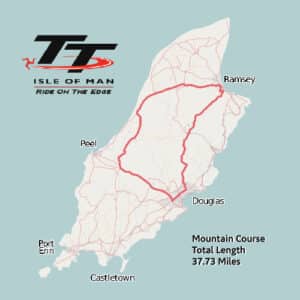
During race weeks the roads are closed, but for most of the year they remain open to the public. This unique blend of everyday road and elite racing is a major part of what defines the Isle of Man TT.
Isle of Man TT Course Overview
Length, layout and road conditions
At nearly 38 miles per lap, the Isle of Man TT course is more than six times longer than a typical Grand Prix circuit. Riders face over 200 corners, constant changes in elevation and a wide variety of road surfaces.
Some sections are smooth and fast, while others are bumpy, narrow and unforgiving. Managing tyres, suspension and mental focus over such a long lap is crucial to success.
Why the Isle of Man TT course is unique
What truly sets the Isle of Man TT apart is its combination of speed and risk. Average lap speeds exceed 130 mph, yet the course offers little run-off. Precision and local knowledge are just as important as outright pace, making experience a major advantage.

Douglas Start and Early Isle of Man TT Sections
Glencrutchery Road and Bray Hill
The lap begins on Glencrutchery Road in Douglas, home to the paddock, pits and grandstand. From the start line, riders accelerate hard towards Bray Hill.
Bray Hill is steep, fast and uneven, with bikes often becoming light as they plunge downhill. It is one of the most dramatic sections of the Isle of Man TT and demands confidence right from the start.
Quarterbridge and Braddan Bridge
At the bottom of Bray Hill lies Quarterbridge, a tight right-hand turn requiring heavy braking. From here, the course heads out of Douglas through Braddan.
Braddan Bridge is narrow and lined by walls, leaving no room for error. Smooth throttle control and accurate lines are essential through this early part of the lap.
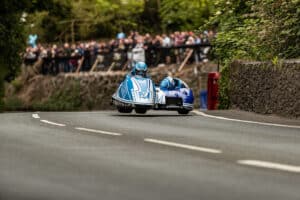
Western Section of the Isle of Man TT Course
Union Mills, Glen Vine and Crosby
The course flows through Union Mills with a series of quick left-right bends. These village sections reward rhythm and balance rather than aggression.
Beyond Union Mills, Glen Vine and Crosby feature faster stretches mixed with technical corners. Changes in road camber and surface can easily catch out riders unfamiliar with the Isle of Man TT course.
Greeba Castle and Glen Helen
Greeba Castle is one of the fastest corners on the lap, taken flat out by leading riders. Soon after, the course drops into Glen Helen, a shaded and technical downhill section.
Glen Helen is narrow, bumpy and visually enclosed, making it one of the most demanding parts of the Isle of Man TT Mountain Course.
Fast Northern Roads: Kirk Michael to Ballaugh
Kirk Michael village
Leaving Glen Helen, the road opens up towards Kirk Michael. This village section is extremely fast despite being lined with houses, walls and street furniture.
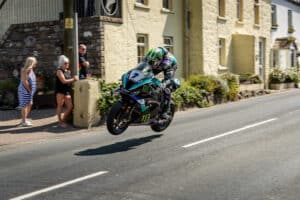
The sheer speed through Kirk Michael highlights the bravery and precision required at the Isle of Man TT.
Ballaugh Bridge at the Isle of Man TT
After Kirk Michael, riders charge towards Ballaugh Bridge. The famous hump-backed bridge often launches bikes into the air, making suspension setup and timing critical.
Ballaugh is one of the most photographed spots on the Isle of Man TT course and a favourite with spectators.
Ramsey and the Climb to the Mountain
Ramsey Hairpin and town section
The approach to Ramsey features flowing roads before tightening into the town itself. Parliament Square and other corners demand strong braking and good control.
The Ramsey Hairpin, taken in first gear, marks a dramatic change in pace and begins the climb towards the Mountain.
Transition to the Mountain Course
From the hairpin, the course narrows and climbs steeply. Trees give way to open moorland as riders head onto the most exposed part of the Isle of Man TT course.
The Mountain Section of the Isle of Man TT
Gooseneck, Mountain Mile and the Bungalow
The Mountain section includes iconic points such as the Gooseneck, Guthrie’s Memorial, the Mountain Mile and the Bungalow. Speeds are extremely high, with long, sweeping bends taken at full throttle.
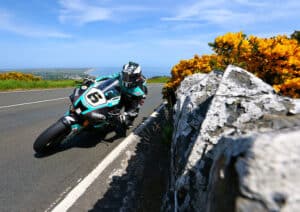
The Bungalow, where the course crosses the mountain railway, is a popular viewing area and marks the start of the descent back towards Douglas.
Weather and visibility challenges
Weather is a major factor on the Mountain. Fog, wind and rain can appear suddenly, even when conditions elsewhere on the island are clear. Riders must constantly adapt, making this section one of the most challenging in the Isle of Man TT.
Final Miles: Creg-ny-Baa to the Isle of Man TT Finish
Creg-ny-Baa corner
After the Mountain, the course passes the famous Creg-ny-Baa pub. This right-hand corner is one of the most recognisable on the lap and is often lined with spectators.
Hillberry, Governors Bridge and the finish line
The final section descends through Brandish and Hillberry before re-entering Douglas. Fatigue can be an issue here, as concentration is vital right to the end.
Governors Bridge is a tight right-left sequence that leads back onto Glencrutchery Road and the finish line, completing one of the most demanding laps in motorsport.
Why the Isle of Man TT Mountain Course Is Legendary
The Isle of Man TT Mountain Course is more than just a race circuit. It is a historic test of endurance, skill and courage that has challenged generations of riders for over a century.
Its length, speed and unforgiving nature make it unique in world motorsport. Whether experienced in person or followed from afar, the Isle of Man TT remains one of the greatest and most awe-inspiring events in racing history.
Over the years, the Isle of Man TT has attracted enthusiats from all over the world and is the busiest tourist season on the island. Accommodation is usually book a year or more in advance. This blog article provides some useful insights on how to secure accommodation for the IOM TT.